Expertise and text transcription by Professor Ludovic Nys
Professeur en Histoire de l’Art, Université Polytechnique Hauts-de-France;
leading specialist on late medieval figurative arts in the Low Countries
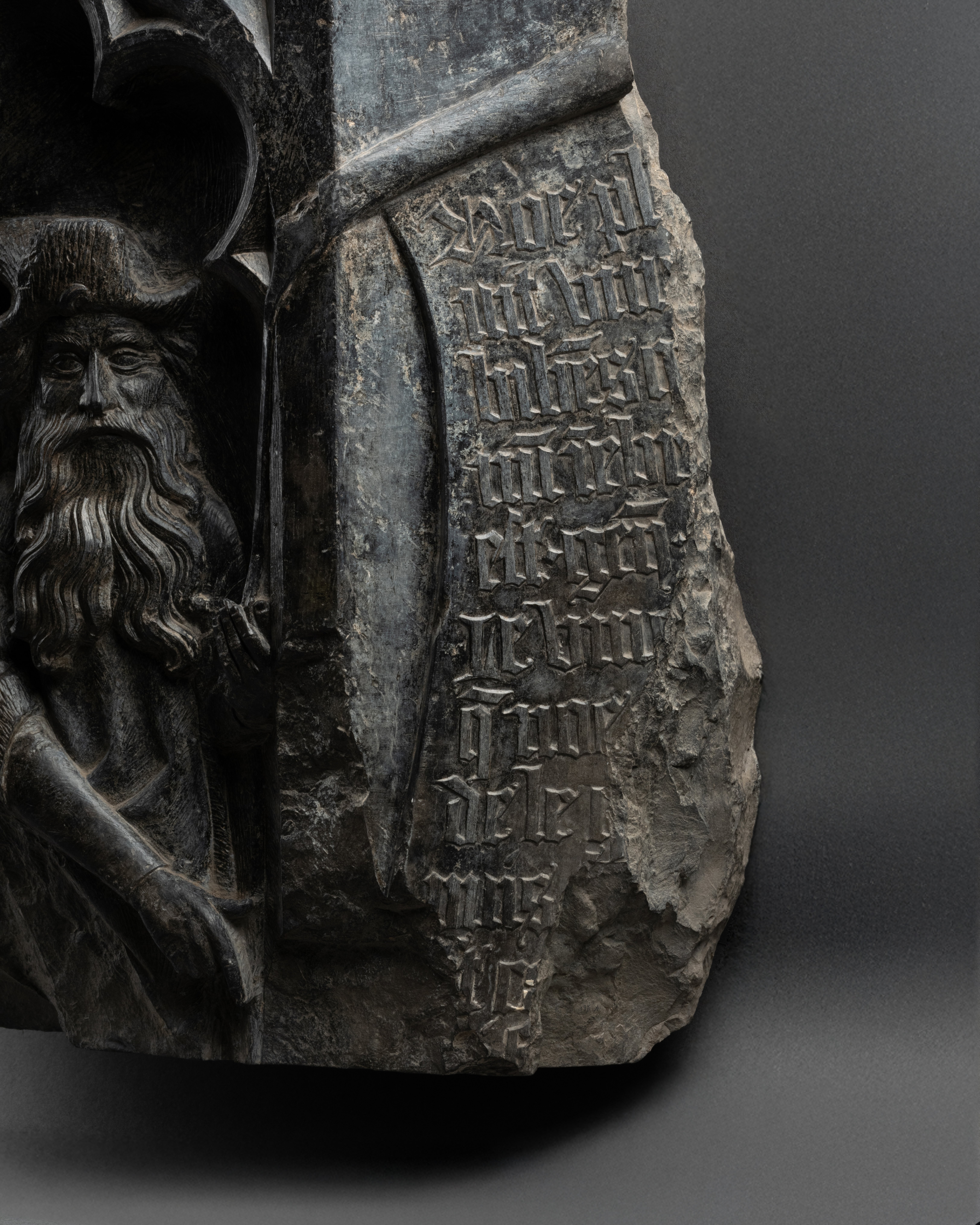
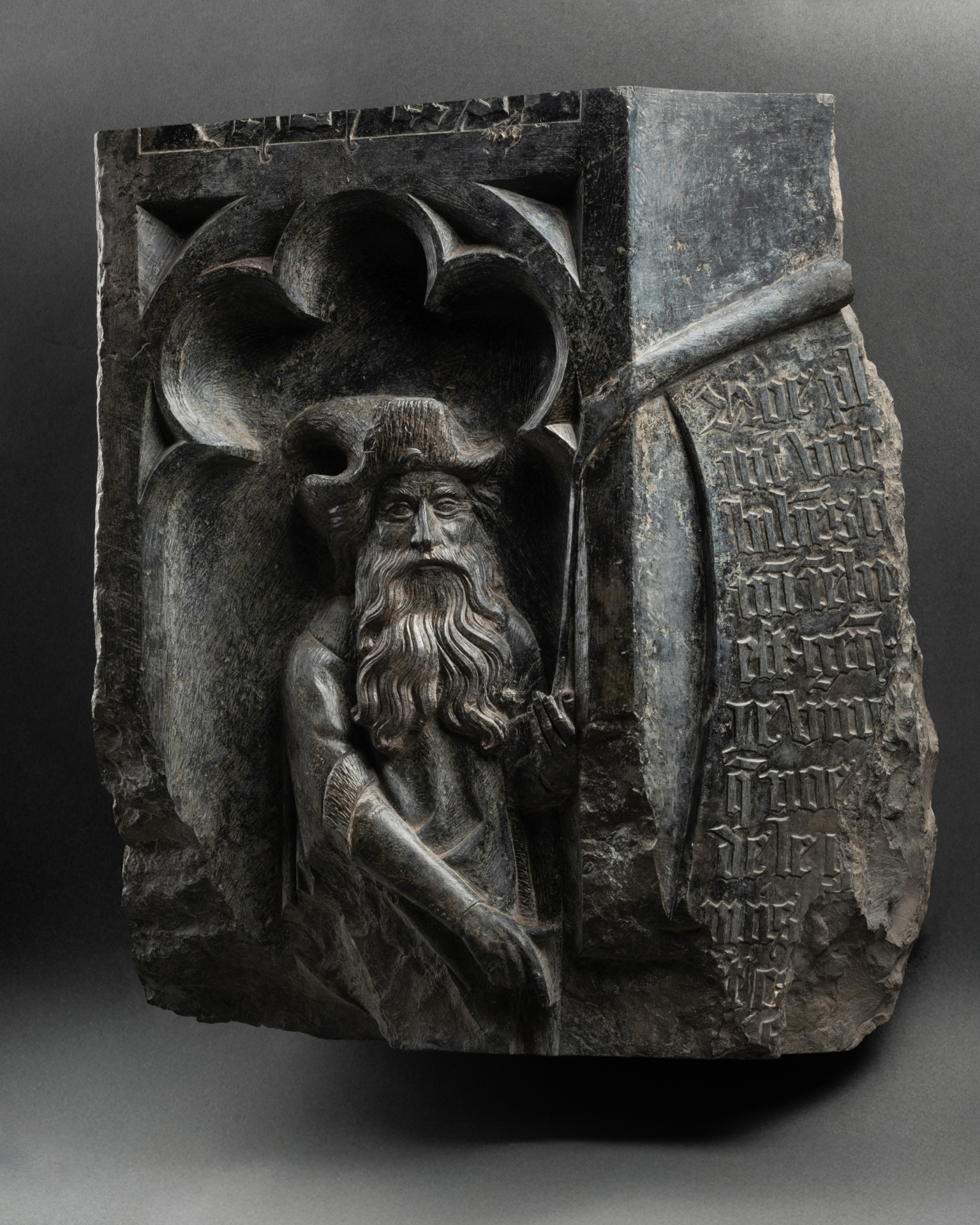
Transcription:
NOE PL[A(N)TA] / UIT VIN[EAM] / BIBE[N]SO(QUE) [VI] / NU(M) (N)EBR[IAT(US)] / EST . GEN(ESIS) [C(H)A(PIT)] / LE VIIII[…] / Q(UE) NOE […] / DE LE G[…] / NUS […]
“Noah planted a vineyard, and drinking of the wine, became drunk.”
— Genesis, chapter 9, verse 20–21
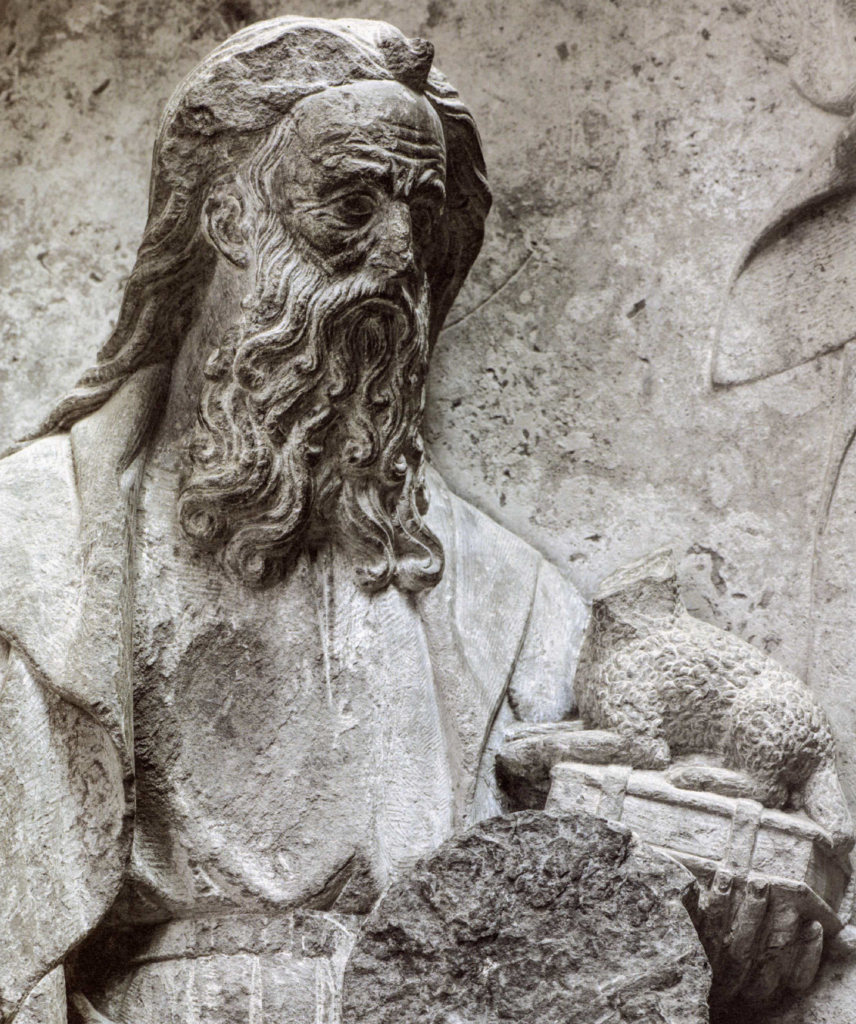
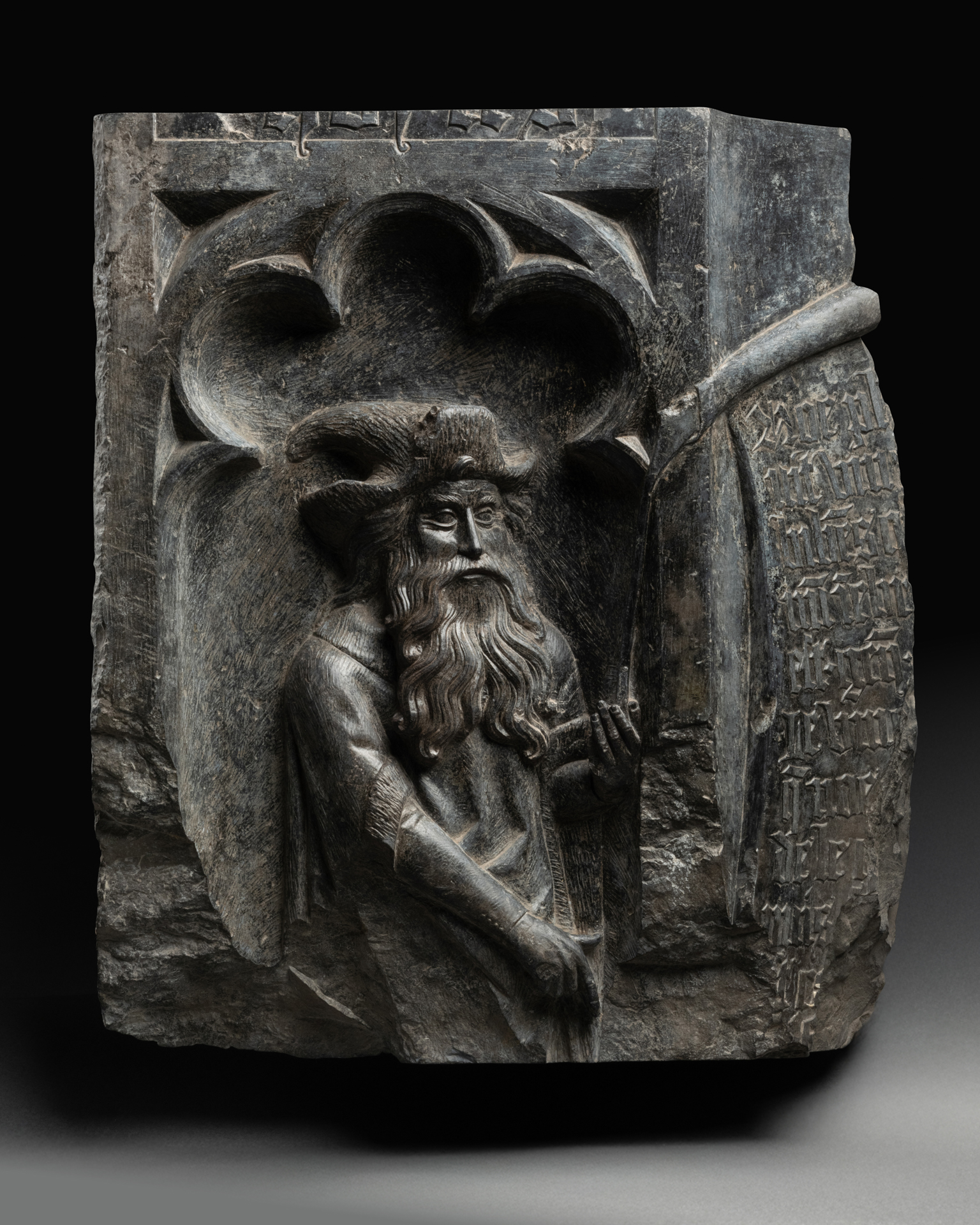
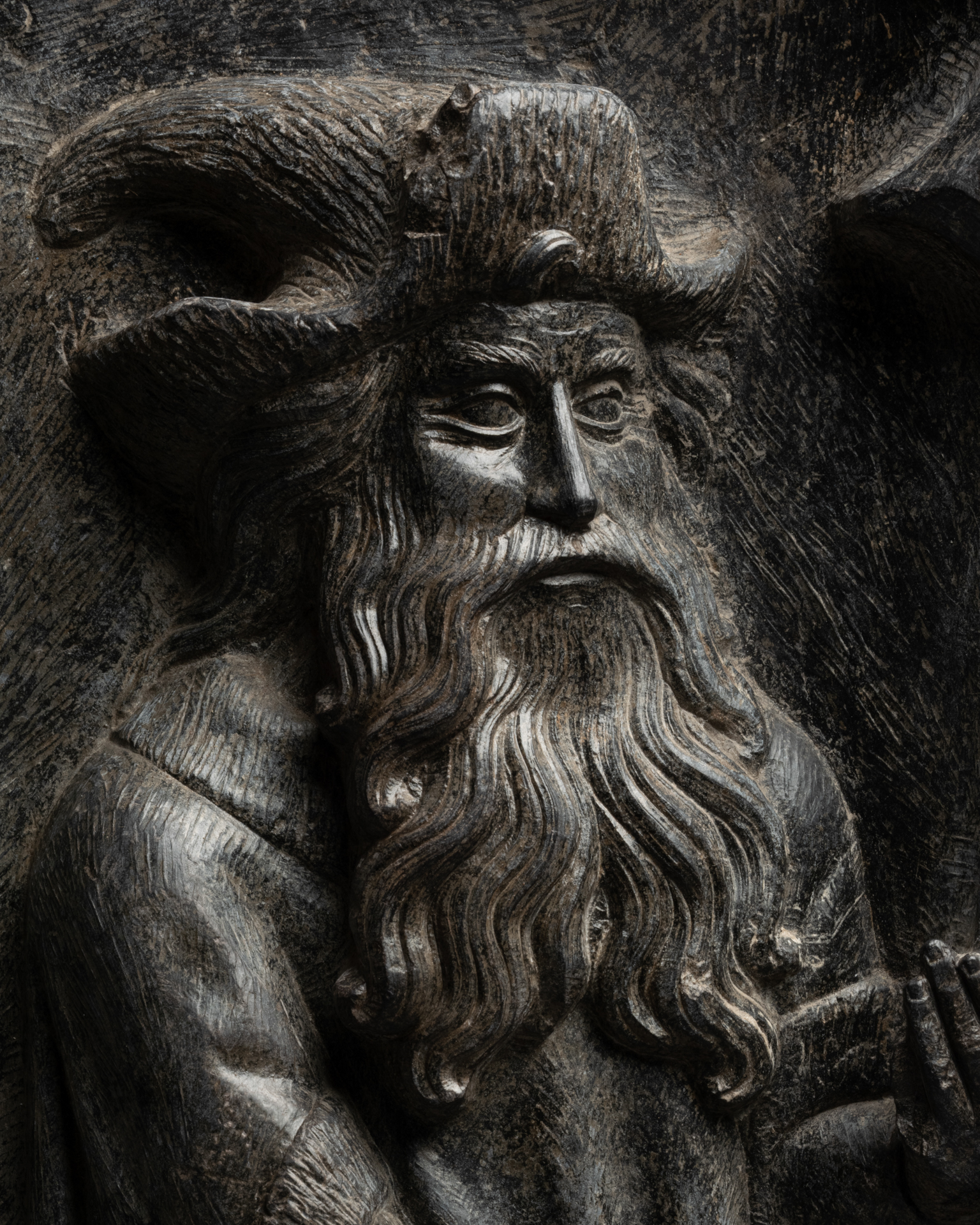
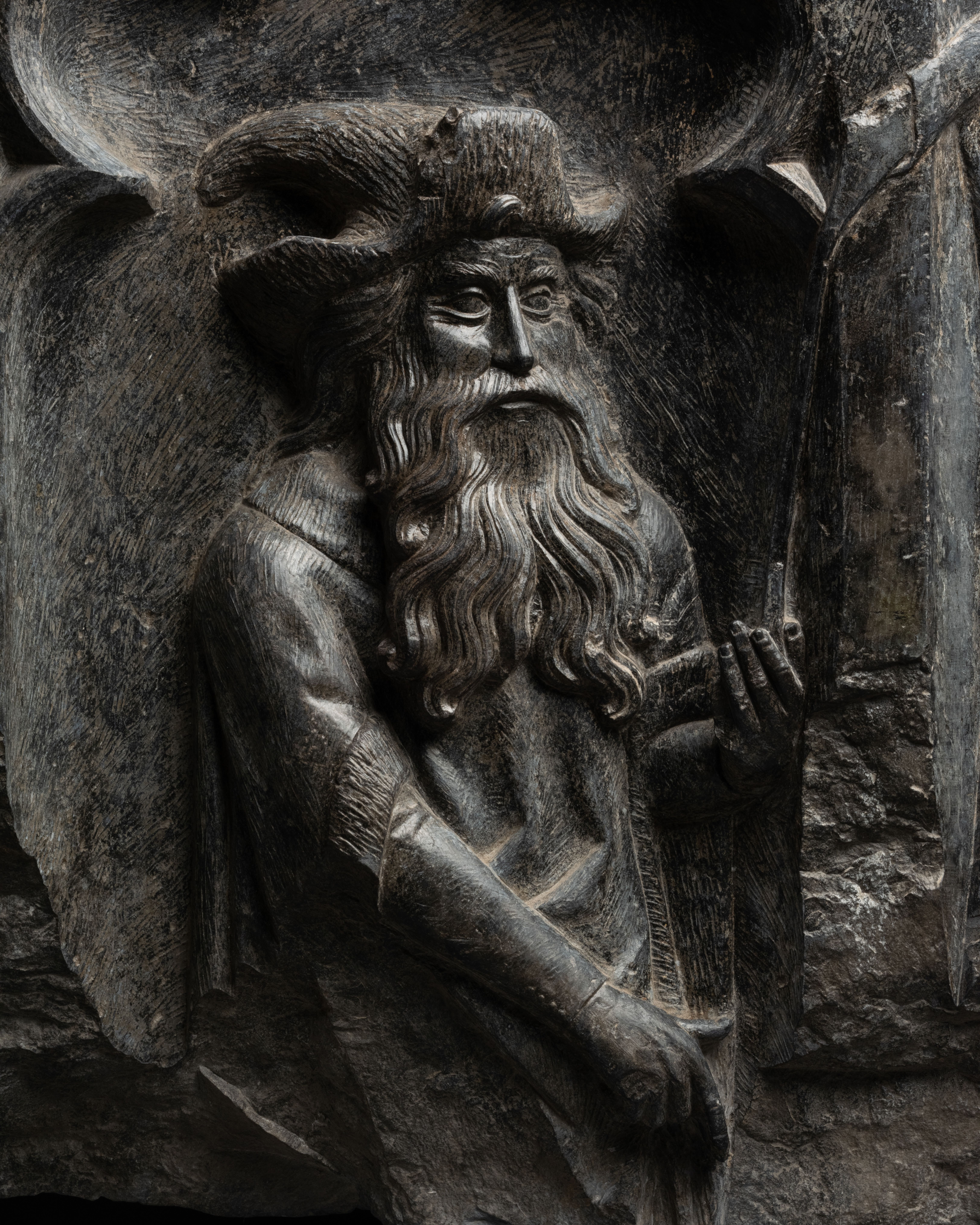
This finely carved relief in blue Tournai limestone likely formed part of a fixed liturgical furnishing, probably a jubé or choir screen. Within a trefoil-arched niche, the patriarch Noah is depicted as an elderly man with a long, wavy beard, his head covered by a broad-brimmed, fur-lined headdress typical of late medieval depictions of biblical figures. The face, of remarkable quality, with its deeply set eyes, finely incised curls, and gently furrowed brow, conveys an arresting gravity. He holds in one hand a slender rod or pointer, and in the other a parchment scroll that unfurls over the chamfered right edge of the panel. The scroll bears a Gothic script from the Vulgate (Genesis 9:20–21)recounting Noah’s planting of the vine and subsequent drunkness.
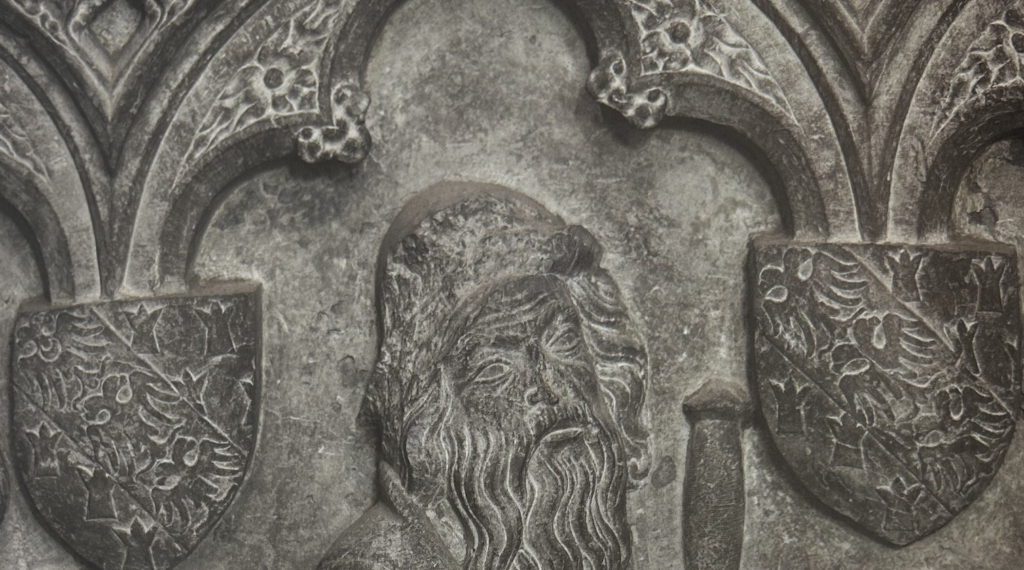
The relief is distinguished by its subtle modelling and refined surface treatment. The sharply broken drapery folds and the form of the epigraphic characters place the work in the sculptural tradition of the Scheldt basin during the third quarter of the fifteenth century. The use of Tournai stone further supports an attribution to a workshop active in Flanders or northern France, possibly in the orbit of Valenciennes, Cambrai, Douai or Arras.
Close parallels are found among the surviving fragments from the former cathedral of Thérouanne (destroyed in 1553), whose inscribed pavement slabs illustrated episodes from Genesis—among them Noah’s drunkenness along with the Latin text of this same verse 21 (bibensque vinum inebriatus est).