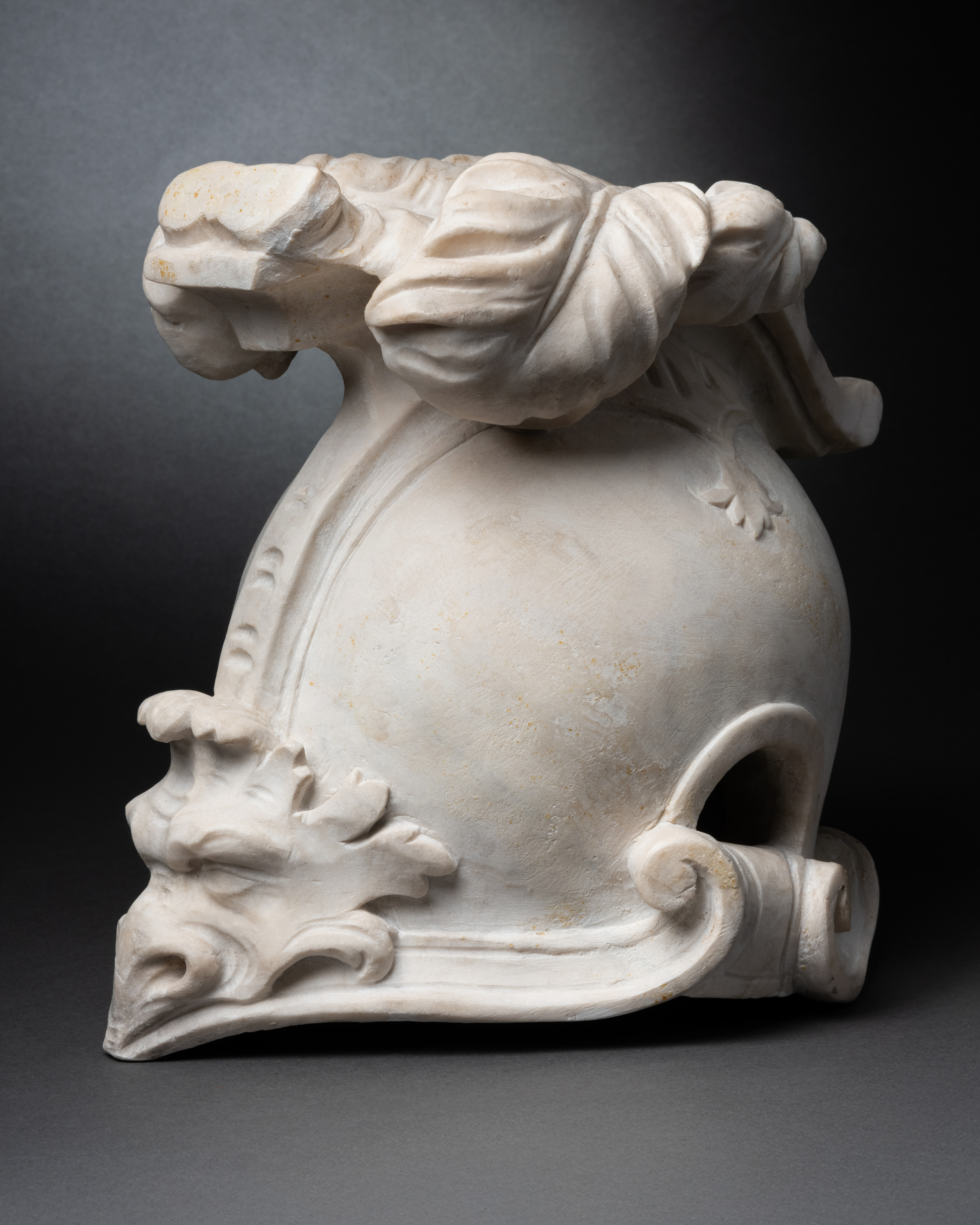
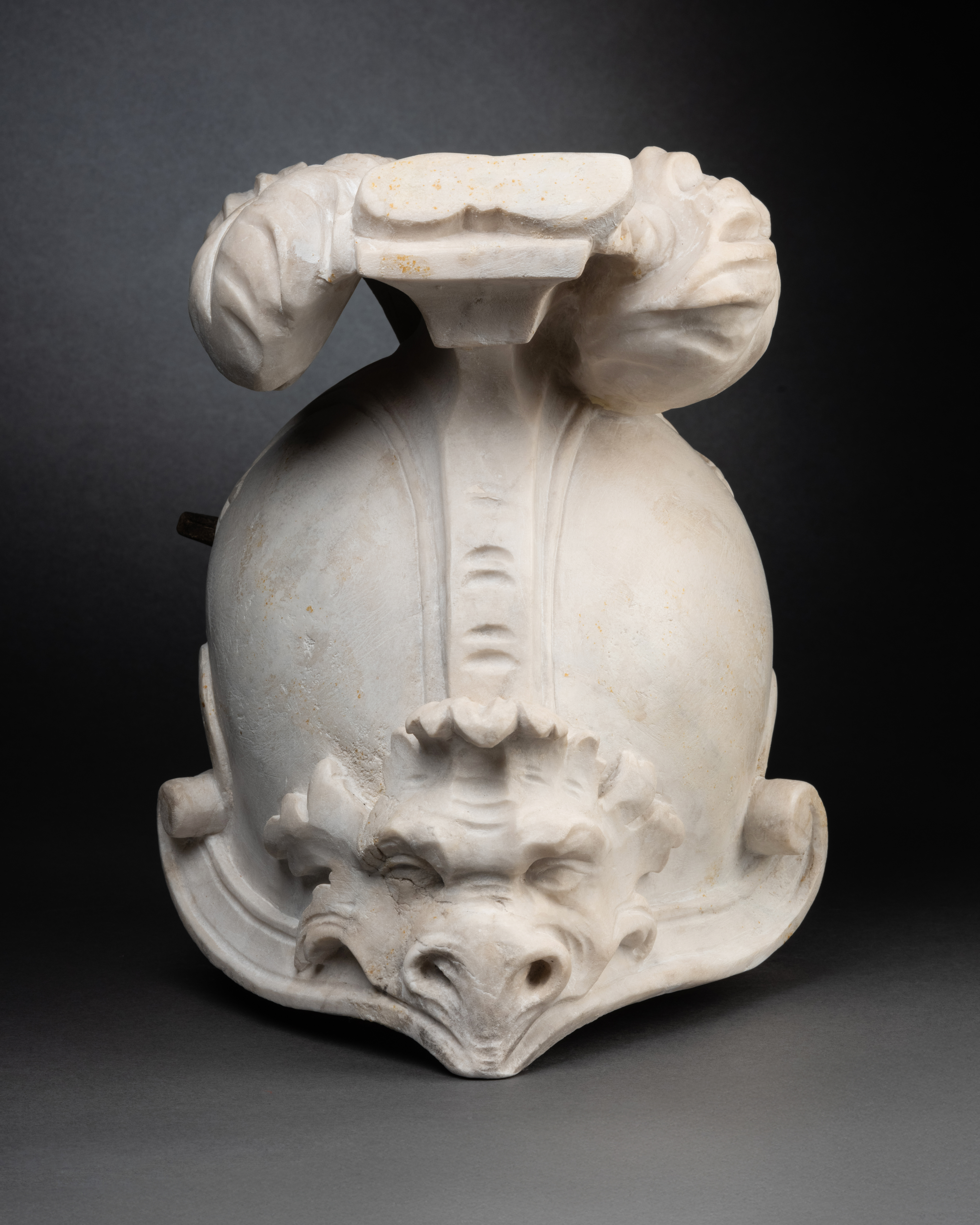
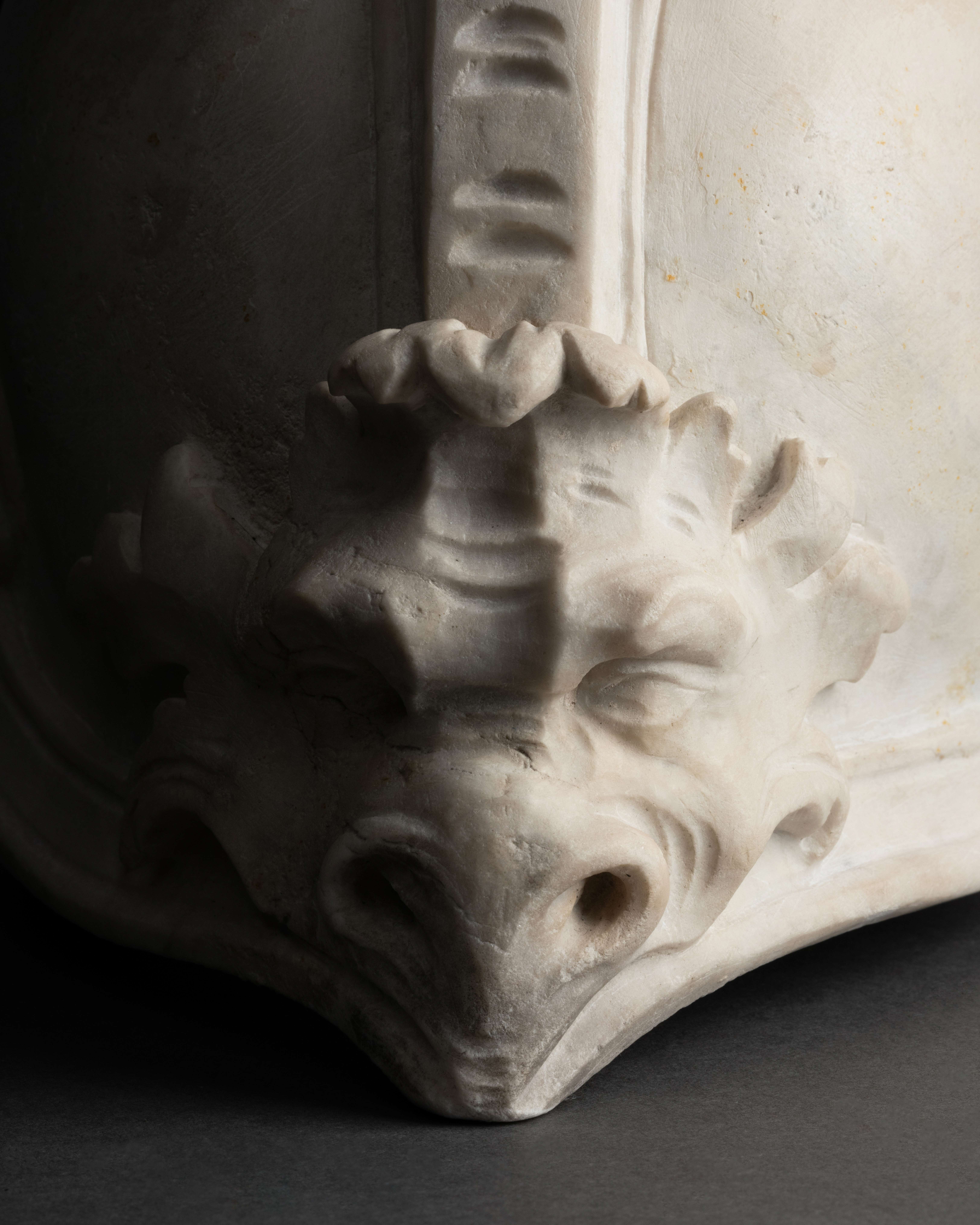
This finely carved marble helmet, adorned with a grotesque mask, exemplifies the 17th-century fascination with antique martial ornament. Its stylised form evokes the elaborate parade helmets known from Renaissance prints and court festivities rather than any functional piece of armour.
Within heraldic practice, such crests (cimieri) served as potent emblems of lineage, rank, and dynastic continuity. As “stable signs of lordship,” they appeared across sculpture, seals, and monumental decoration, projecting aristocratic identity and sustaining the memory of prominent families through repeated visual display.
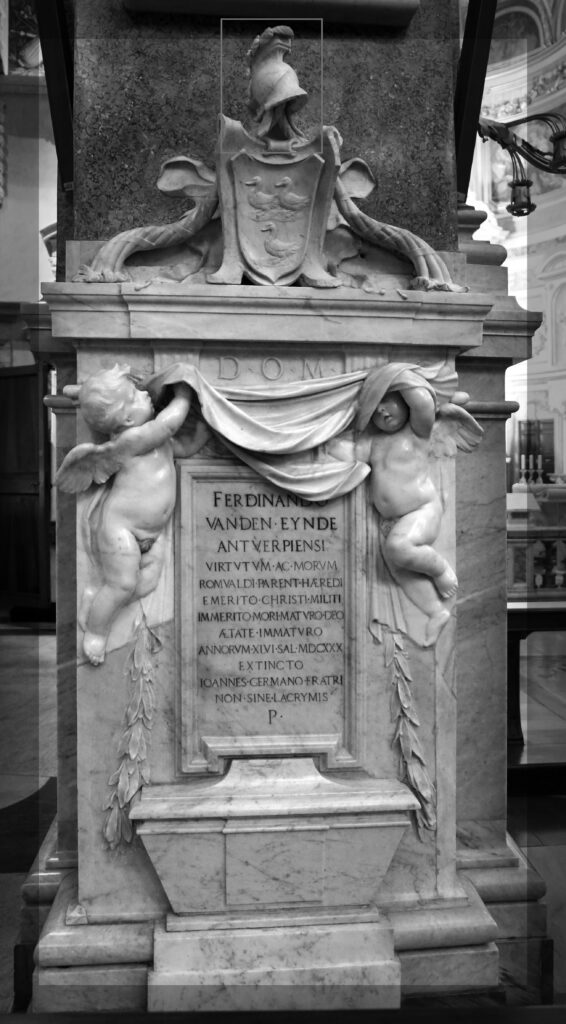
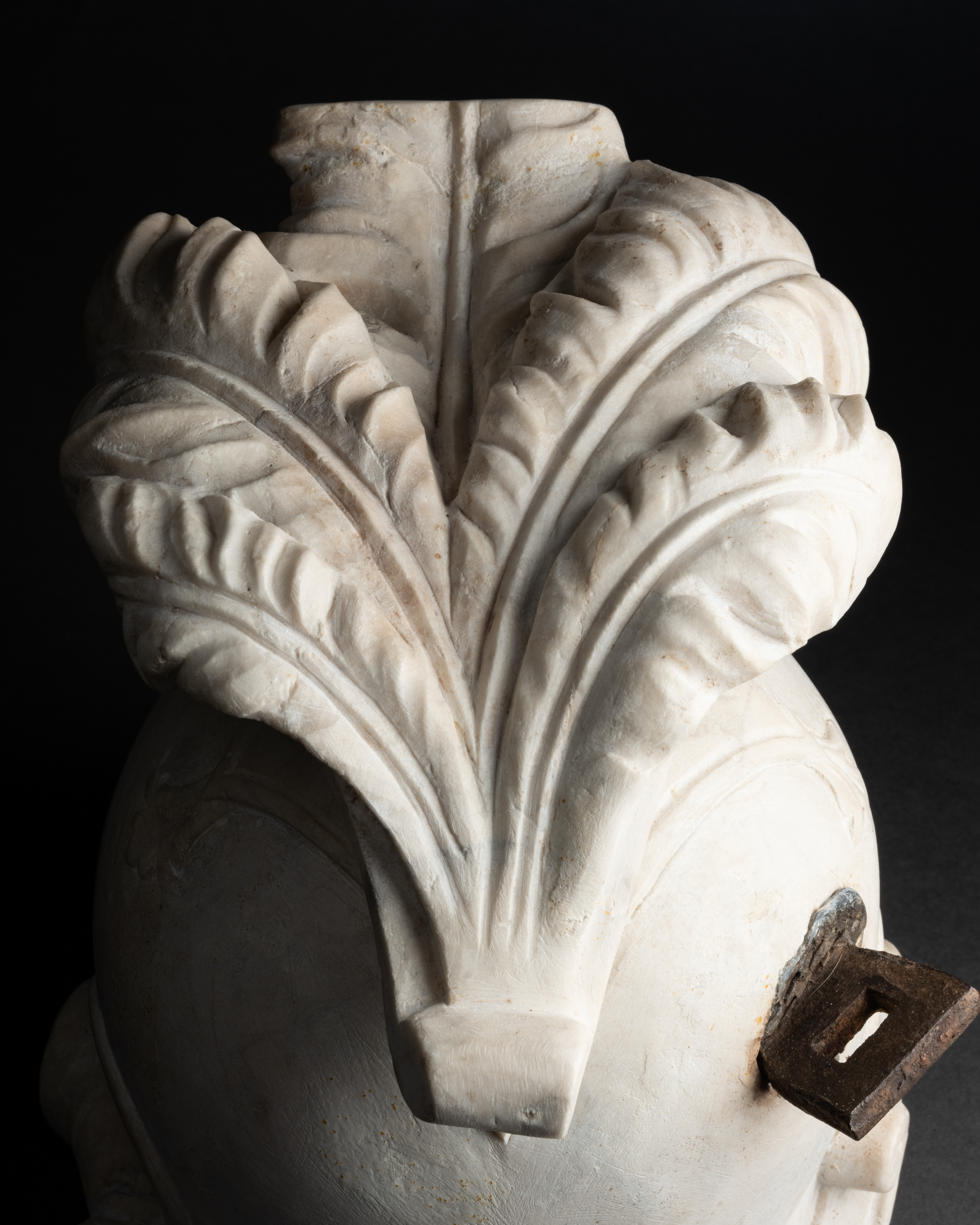
The presence of a metal accroche indicates that the helmet was designed to be suspended—very likely above a coat of arms within a larger commemorative ensemble. This intended placement recalls the arrangement employed by François Du Quesnoy on the monument to Ferdinand van der Eynden (†1630) in Santa Maria dell’Anima, Rome. While parallel in conception, the present example diverges through the addition of a grotesque mask, a feature that aligns it more closely with Italian Renaissance prototypes.
The sculpture thus reflects the fluid exchange of heraldic and antiquarian motifs between French and Italian workshops. By merging martial symbolism with classical idioms, it participates in the broader 17th-century vocabulary of dynastic celebration—an artistic language crafted to express enduring authority, cultivated taste, and the permanence of noble memory.