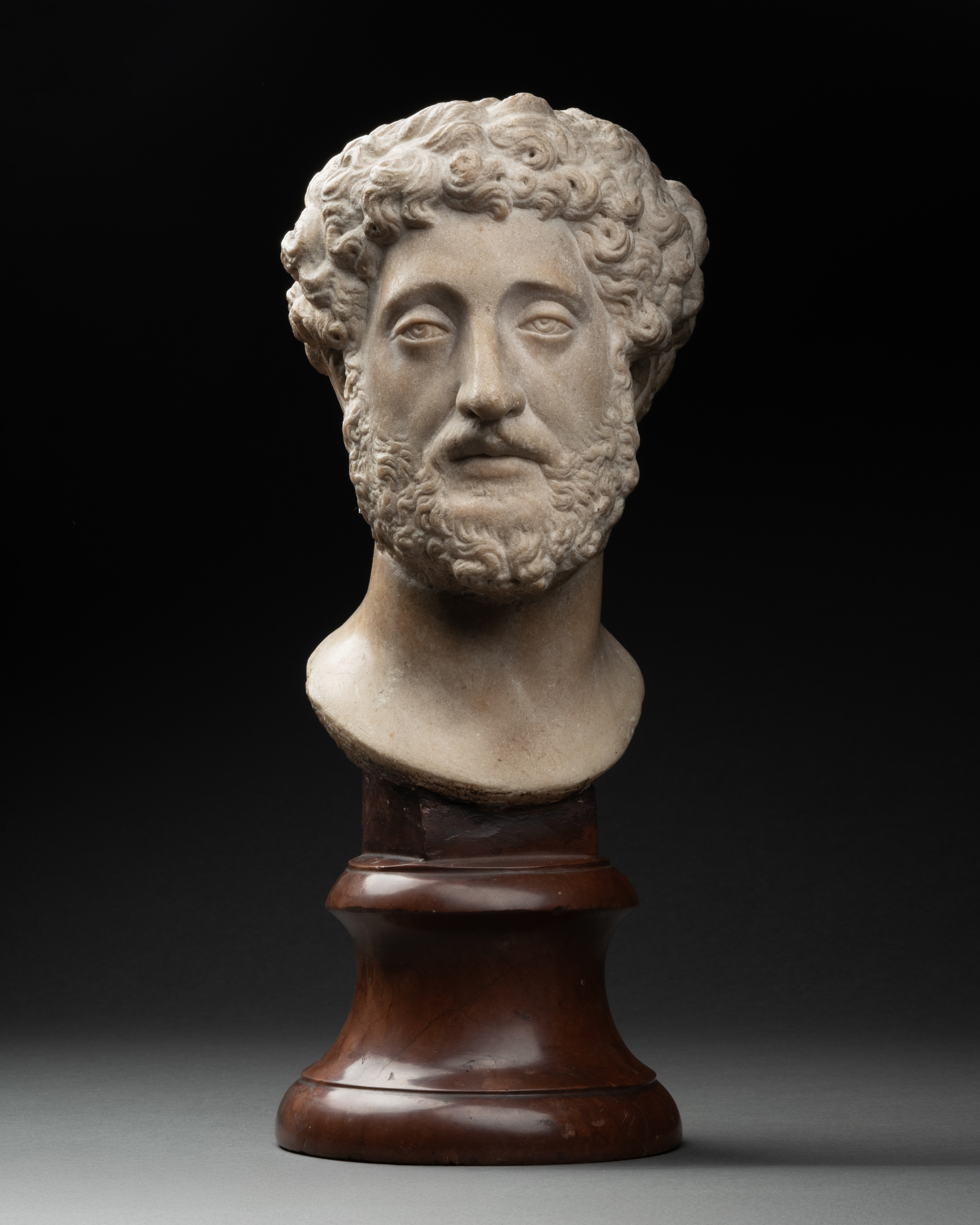
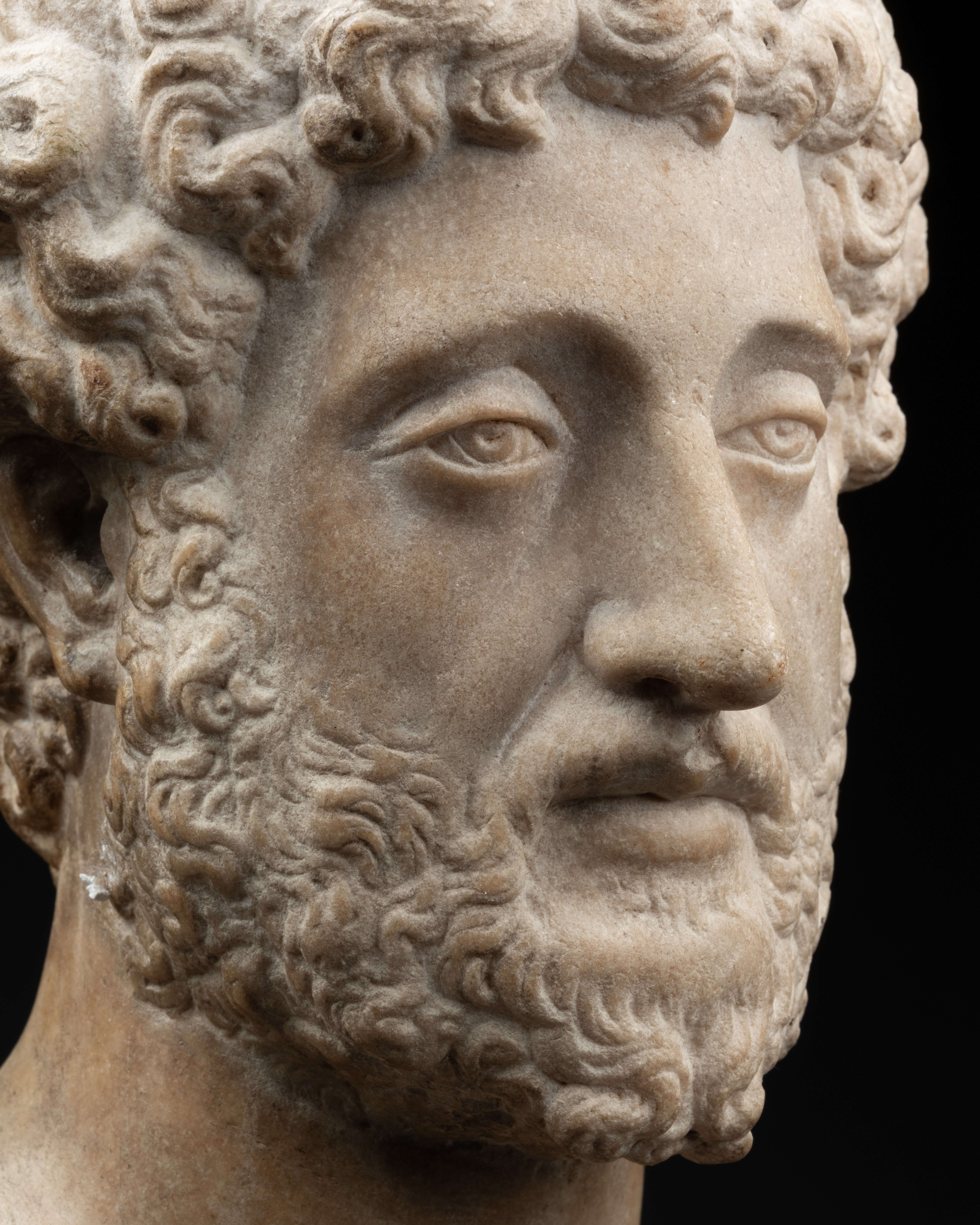
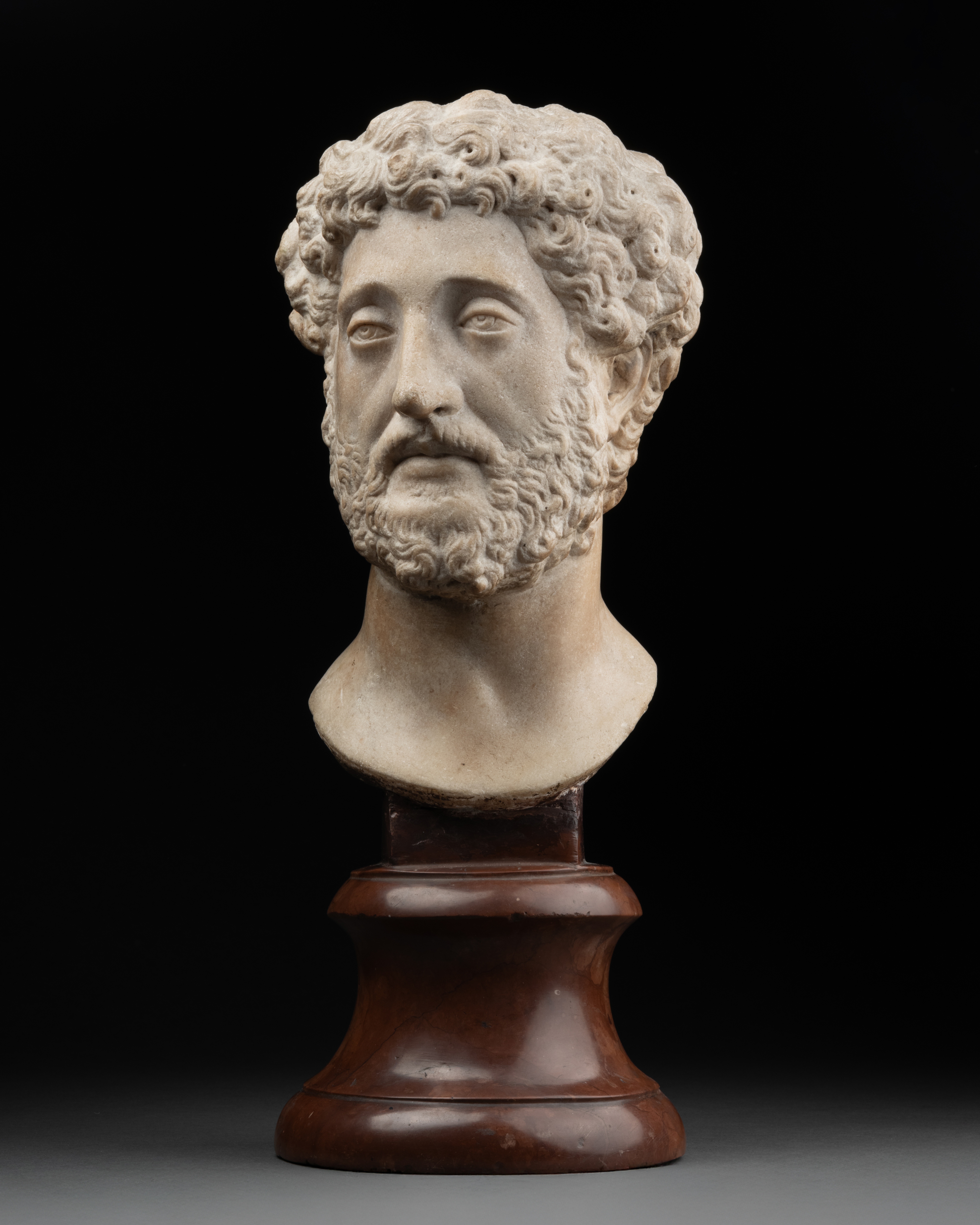
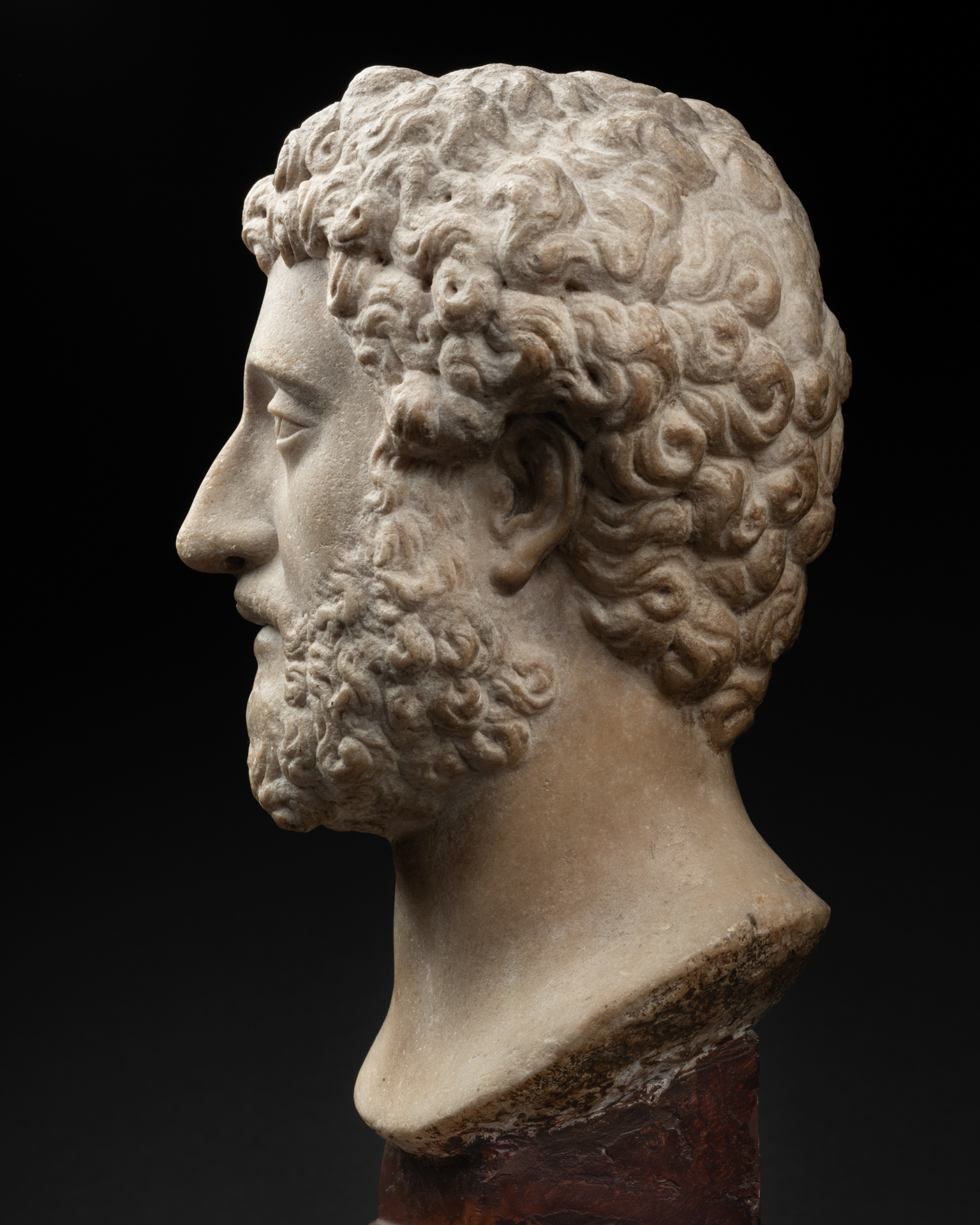
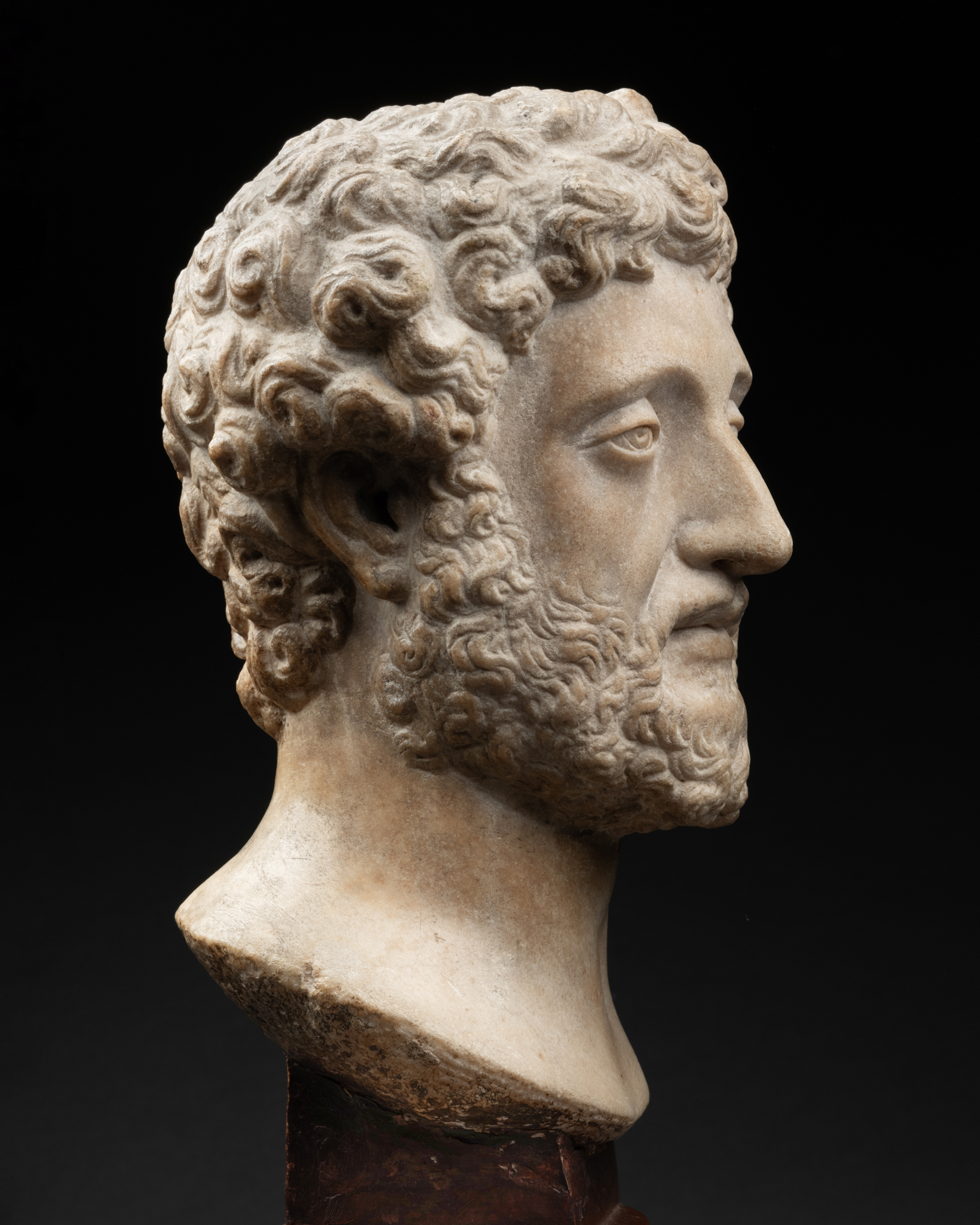
Carved in northern Italy in the late 16th century, this refined marble head portrays Marcus Aurelius, long esteemed in humanist culture as the exemplary “philosopher emperor.” Its compact scale and polished execution suggest a work intended for an erudite private setting—a studiolo or collector’s cabinet where classical virtues and imperial models were actively contemplated.
The head is turned and slightly tilted, giving the figure a gentle dynamism, while the heavy-lidded, unbored eyes project the distant, introspective gaze central to Marcus Aurelius’s ancient iconography. The softly drilled curls of the hair and beard, arranged in an orderly, rhythmic mass, reflect a careful study of the Roman Type III portrait established early in the emperor’s reign(161_180 AD). The beard, fuller than in the emperor’s earlier portrait types, descends in tapered waves toward the chin, subtly articulating the jawline. Gently hollowed cheeks, lightly incised nasolabial folds, and a broad, calm forehead contribute to a mature, measured expression aligned with Renaissance ideals of Stoic virtue.
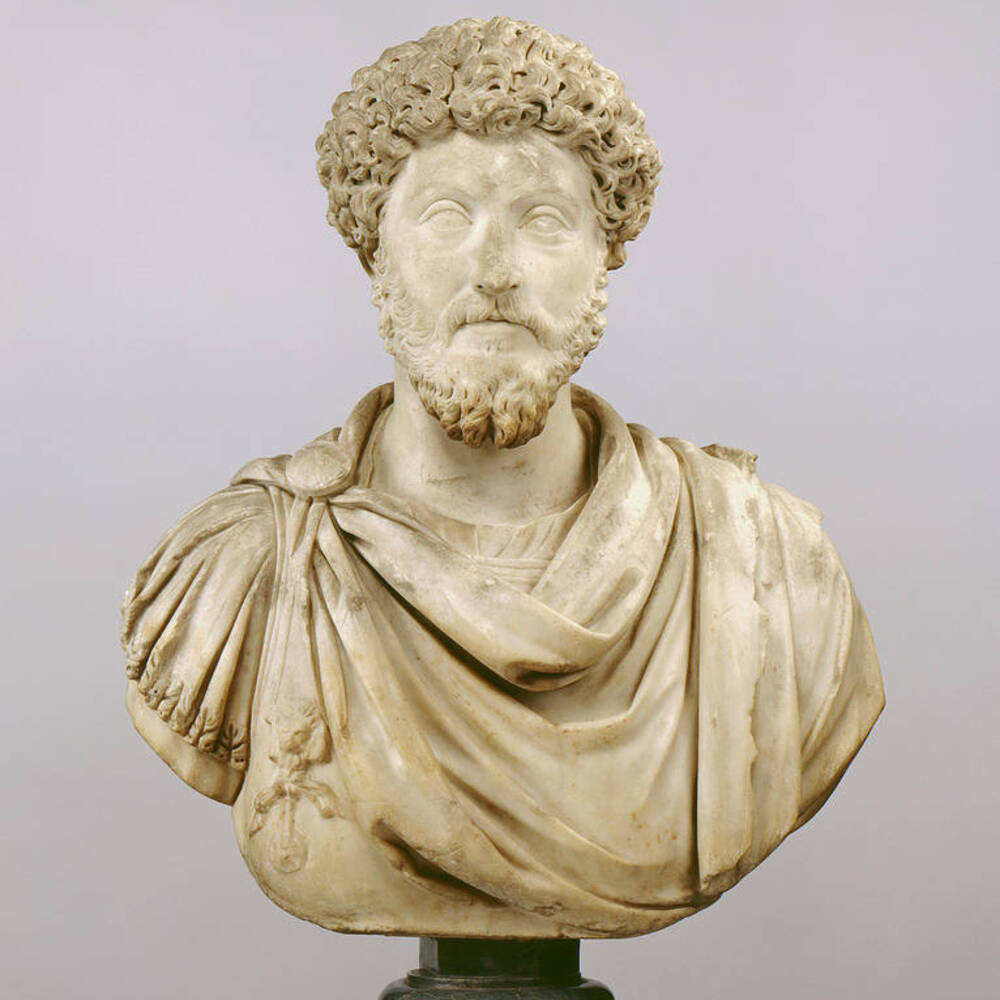
This work fits comfortably within the refined production of small-scale imperial busts favored by collectors in northern Italy during the16th-17th century. Responding to the flourishing antiquarian culture of the period, the sculptor reimagined Marcus Aurelius as an exemplum virtutis, presenting the emperor as a timeless embodiment of moral authority and philosophical composure for early modern viewers.