Provenance: Private French collection since the 1960s
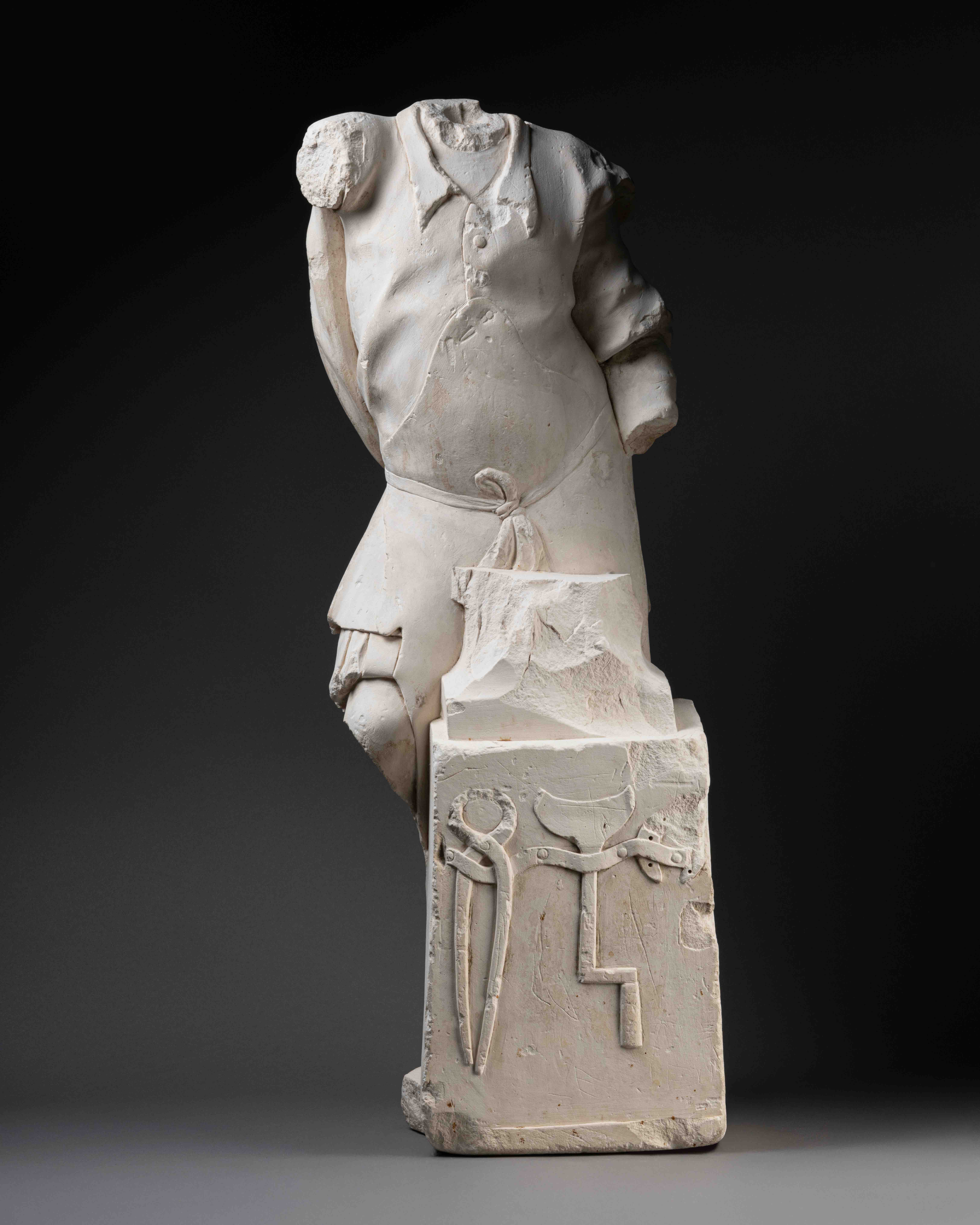
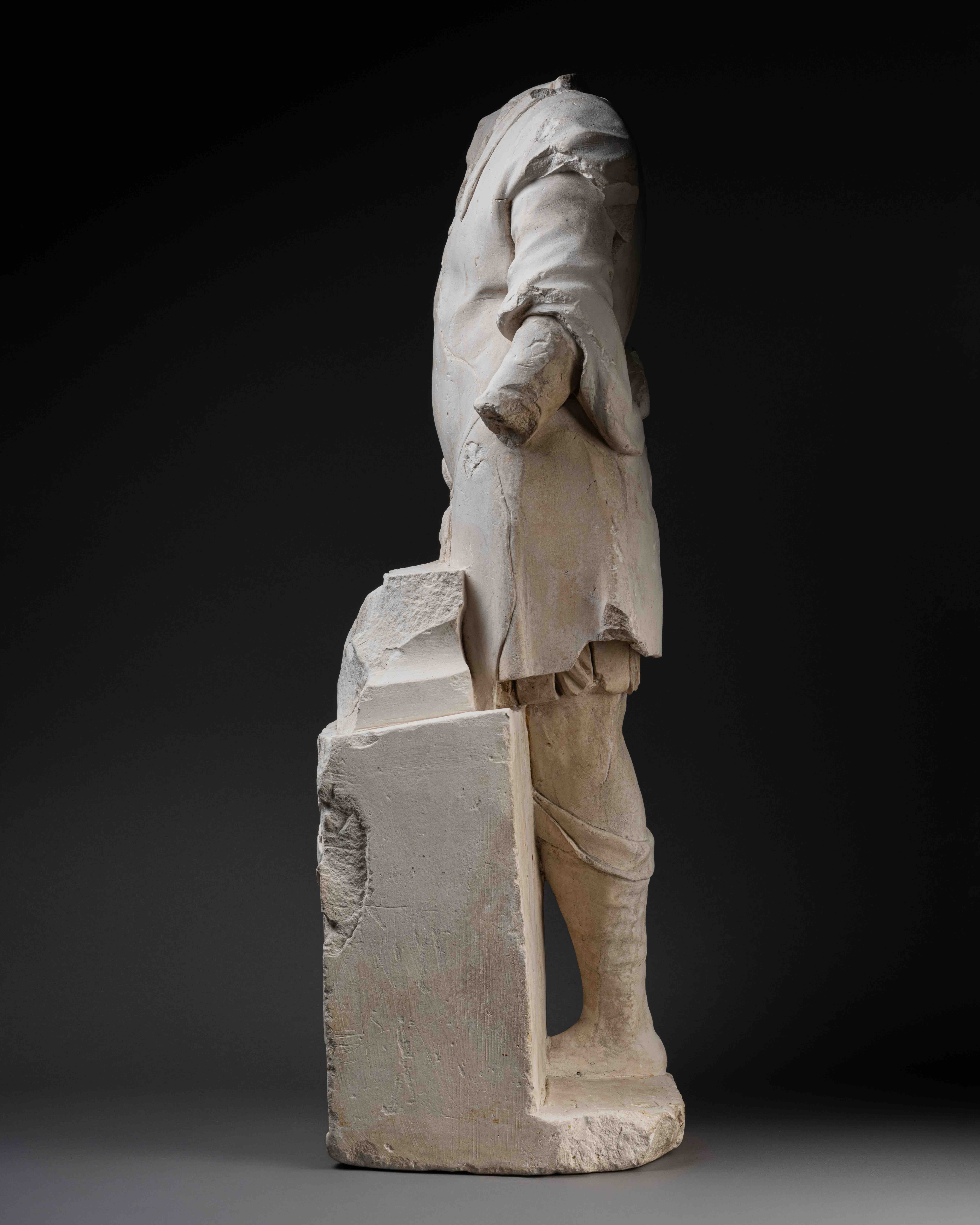
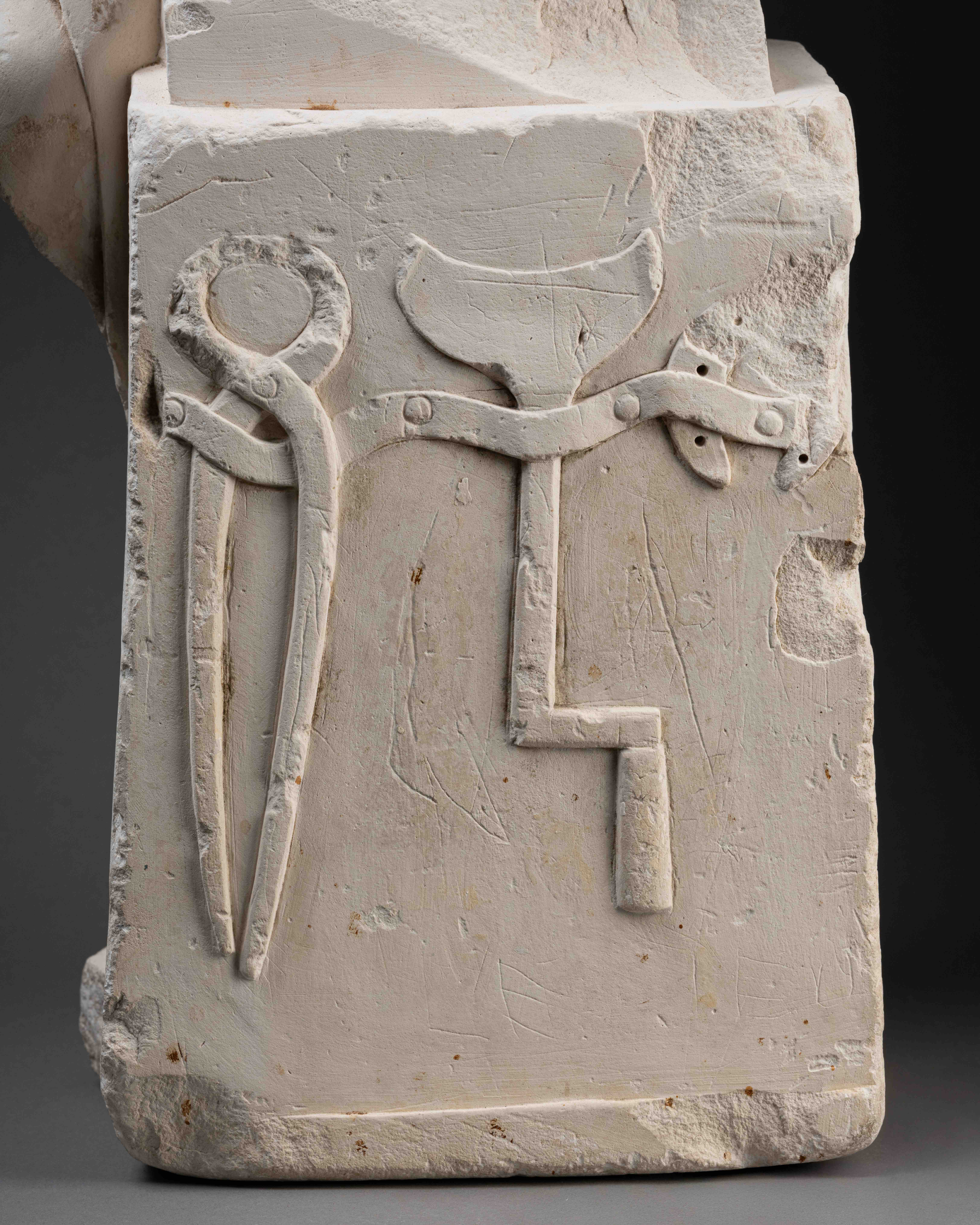
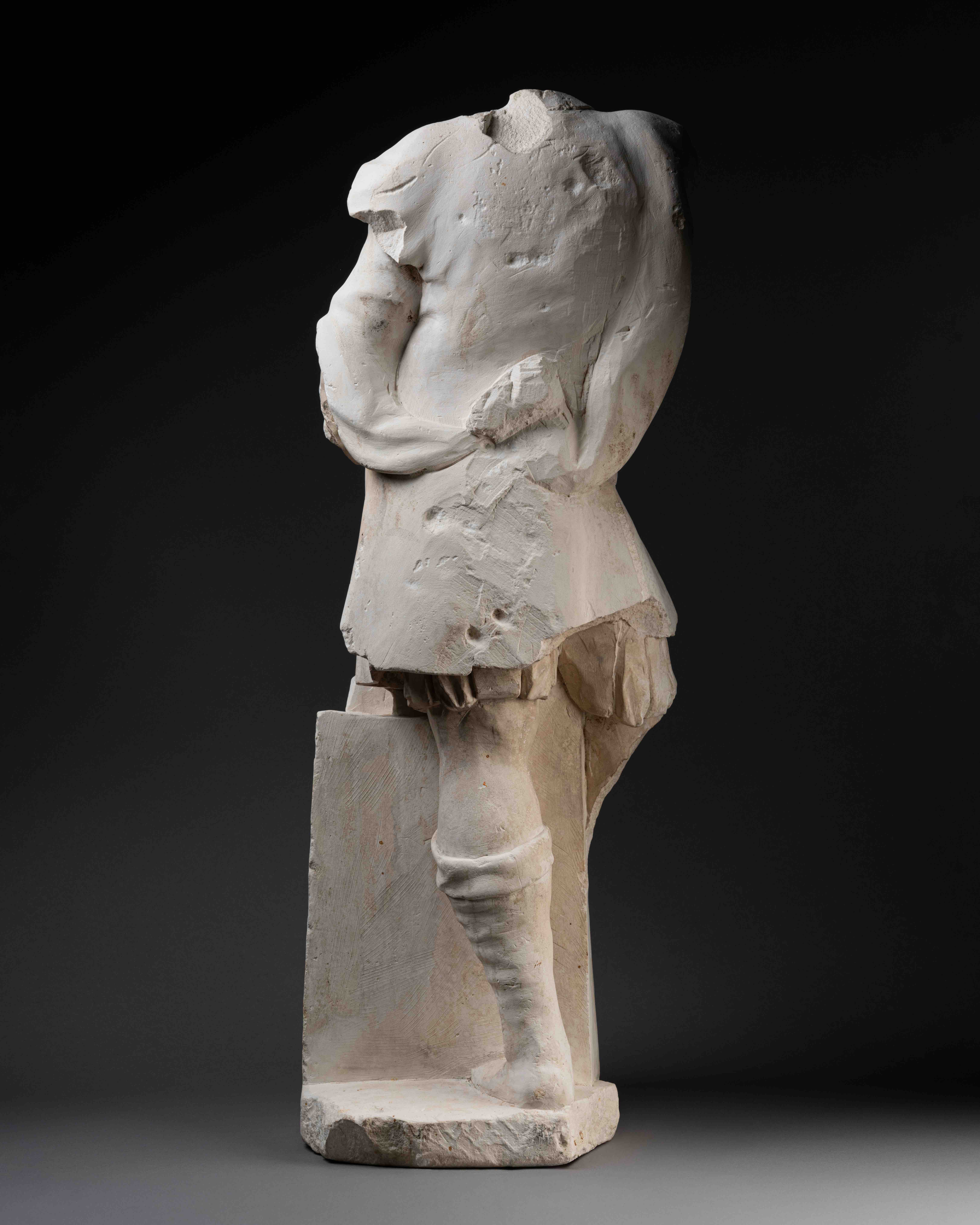
This fragmentary sculpture represents Saint Crispin, the patron saint of shoemakers and the leather trades. It is carved in tuffeau, the fine-grained limestone characteristic of the Loire Valley and widely employed in the region’s architecture and sculpture during the Renaissance. The saint is depicted standing before a workbench, the front of which is carved in relief with tools associated with his craft, including pincers and other implements traditionally linked to shoemaking.
Despite its fragmentary condition, the sculpture preserves a high degree of artistic refinement. The figure adopts a subtly animated stance, with a gentle contrapposto that introduces a slight torsion through the torso and shoulders. This restrained yet perceptible movement animates the composition, while the diagonal fall of the drapery across the chest reinforces the sense of a momentary gesture.
The treatment of the costume reflects careful observation. The saint wears a fitted doublet with a crisply defined collar, seams and buttons, while a tied apron falls in structured folds at the waist. The modelling of the torso beneath the garment remains supple and controlled, revealing a confident understanding of anatomy and an attentive approach to volumetric articulation.
These stylistic qualities place the work within the sculptural production of the Loire Valley in the first half of the sixteenth century, where artists working in tuffeau developed a distinctive language combining naturalistic observation with elegant restraint. The restrained animation of the figure, together with the rhythmic articulation of the drapery, recalls works produced in Touraine, particularly those associated with the artistic milieu of Jean Juste and the circle of sculptors active in the region during this period.
According to hagiographic tradition, Saint Crispin and his brother Crispinian were Roman nobles who travelled to Gaul in the third century to preach Christianity. Settling in Soissons, they supported themselves by working as shoemakers while evangelizing the local population. Martyred during the persecutions of Diocletian, they were subsequently venerated as the patron saints of shoemakers and workers in the leather trades.
A sculpture of this type may have formed part of the decoration of a guild chapel or devotional setting connected with the leather trades, where the image of the saint would have invoked protection over craftsmen and their work.